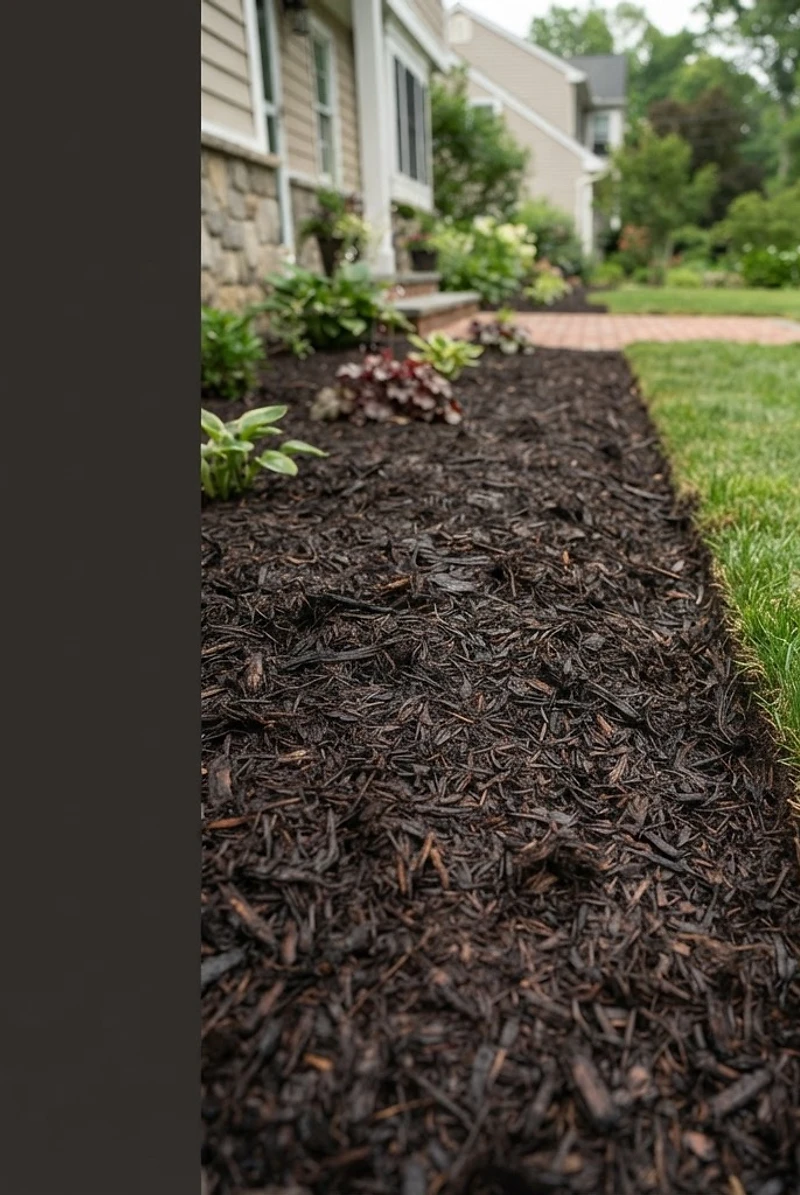
the process
Steps for a Successful Mulch Application
Before spreading material, the bed must be prepared to ensure the layer functions as intended. These steps help maintain plant health and tidy appearance.
Clear away dead leaves, twigs, and debris from the soil surface to prevent fungal growth. If existing mulch is severely matted or decomposed, raking or removing the top layer can improve airflow to the roots.
Edging the beds is a critical step that creates a physical trench between the lawn and the garden. This defined border keeps grass from creeping into flower beds and provides a clean edge that helps hold the material in place.
Apply the material evenly, aiming for a depth of two to three inches. Avoid piling mulch directly against the base of tree trunks or shrub stems, as this can trap moisture and encourage bark rot or pest infestations.
- Debris removal
- Bed edging
- Depth monitoring
- Watering
Avoid using plastic landscape fabric under mulch if you prioritize soil health and worm activity.
material selection
Common Mulch Types
The choice of material often depends on the specific needs of the plants and the visual outcome desired for the landscape.
Hardwood Bark
A popular organic option that slowly breaks down, adding nutrients to the soil over time.
Pine Needles
Often used for acid-loving plants like azaleas or rhododendrons due to their subtle acidity.
River Rock
An inorganic choice that lasts indefinitely but does not improve soil fertility or structure.
costs
What Affects the Cost
Several factors influence the total price of a project. Discussing these with a provider helps clarify the scope of work.
volume
Larger beds require significantly more cubic yards of material.
product
Premium bark or stone typically costs more per unit than standard wood chips.
labor
Significant weed removal or extra edging work increases the labor time.
Final pricing is set by the provider after they assess your property. Quote requests through this site are free with no obligation.
seasonal
Timing for Mount Vernon Landscapes
Regional weather patterns in New York play a major role in when to refresh garden beds.
Early Spring
Apply before perennials sprout to avoid damaging new growth.
Summer Check
Inspect existing layers for erosion after heavy rain events.
Related pages
More landscaping help in Mount Vernon
Jump to a related page for more detail.
All landscaping services in Mount Vernon
Compare the landscaping options available in Mount Vernon and see what each one covers.
Read moreLawn Maintenance in Mount Vernon
What lawn maintenance involves in Mount Vernon, what affects the cost, and how to request a quote.
Read moreGarden Design in Mount Vernon
What garden design involves in Mount Vernon, what affects the cost, and how to request a quote.
Read moreTree Trimming in Mount Vernon
What tree trimming involves in Mount Vernon, what affects the cost, and how to request a quote.
Read moreFAQs
Common questions about mulching in Mount Vernon
Service area
Areas we cover for Mulching
Every area below has published coverage. Your request is matched by ZIP code to the professional whose confirmed service territory covers your address.
- Mount Vernon, NY
Areas outside this list are not covered yet — coverage grows as new local professionals join. Submit your ZIP code and we'll match your request to the closest available coverage.
Homeowner Guides
Mulching guides and advice
Independent, homeowner-focused reading before you request quotes.
Christmas Lights Installation: Common Problems and How to Prevent Them
Learn how to identify and prevent common issues with seasonal lighting to keep your holiday display safe and functional throughout the season.
Read moreOne-Time or Regular Landscaping Service? How to Decide
Deciding between one-time landscaping projects and ongoing maintenance depends on your property goals and time availability. Learn how to choose the right fit.
Read more